What Are Polyhydroxyalkanoates (PHAs)?
Published: March 19, 2026 · Reading time: 3 minutes
Introduction
Polyhydroxyalkanoates (PHAs) are a family of microbially produced polyesters that originate from renewable carbon sources through microbial fermentation processes. These materials are stored inside microorganisms as intracellular carbon and energy reserves and can be processed into biodegradable plastics with a wide range of material properties. PHAs exhibit tunable characteristics; from brittle, highly crystalline thermoplastics to flexible elastomers, depending on monomer composition and molecular weight (Fig. 1).
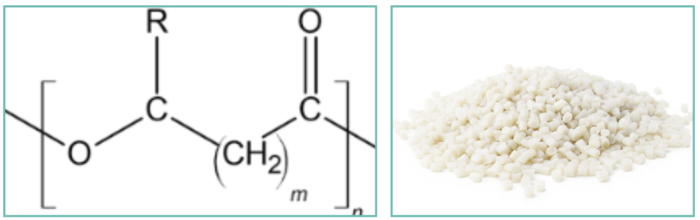
Figure 1. Chemical structure PHA and the PHA granules
What Do “Fully Bio-degradable and Bio-compostable” Terms Really Mean?
A polymer is fully biodegradable when it is metabolized by microorganisms into CO₂, water (in aerobic environments), and biomass — without leaving persistent fragments or toxic residues. PHAs biodegrade through enzymatic action in diverse environments such as soil, freshwater, and marine habitats. Their versatile environmental degradation is a defining trait [1].
Compostable materials comply with standards such as EN 13432 (Europe) and ASTM D6400 (US), requiring high conversion to CO₂ under industrial composting conditions. PHAs can meet these standards and often degrade in lower‑temperature home compost environments depending on formulation.
Advantages of Polyhydroxyalkanoates (PHA)
Over Conventional Synthetic Polymers
Compared to fossil‑based plastics like PE, PP, and PET, PHAs offer renewable feedstock origin, true biodegradability in multiple environments, marine degradability, and reduced long‑term microplastic persistence. Their ability to replace conventional plastics in packaging and other sectors reflects their broader functional scope [2].
Over Other Biodegradable Polymers
PHAs uniquely combine degradability in marine and soil environments with tunable material properties and biocompatibility. This enables tailored solutions across packaging, textiles, and biomedical applications.
Applications of PHAs
Polyhydroxyalkanoates (PHAs) are used in packaging (films, rigid containers, coatings), textiles and consumer goods, biomedical fields (drug delivery, tissue scaffolds, implants), and environmental uses such as wastewater treatment carbon sources.
Unlocking the Full Potential of PHAs through Precision Micro-Compounding
Although polyhydroxyalkanoates (PHAs) offer compelling sustainability advantages, they present intrinsic material and processing challenges that must be addressed for broader industrial adoption. One of the main limitations is their narrow thermal processing window. In many grades, particularly PHB and PHBV, the melting temperature is close to the degradation temperature. This increases the risk of chain scission, molecular weight reduction, discoloration, and loss of mechanical performance during melt processing. Conventional equipment with long residence times can intensify these effects [3].
PHAs are also often brittle due to their relatively high crystallinity, resulting in low elongation at break and limited impact resistance. Post-processing embrittlement caused by secondary crystallization can further reduce long-term toughness. In addition, PHAs are rheologically sensitive and prone to shear- and moisture-induced degradation, making precise control of processing conditions essential. Given their higher cost compared to commodity plastics, inefficient trial-and-error development at larger scale becomes economically challenging.
Micro-compounding provides a fast route to overcome these issues by developing new formuations using PHAs and exisrting additived. Micro-compounders allow accurate temperature control and adjustable residence times, minimizing thermal degradation and preserving molecular weight. Because only small material quantities are required, rapid screening of plasticizers, toughening agents, compatibilizers, and reactive systems becomes economically feasible. Controlled shear and mixing conditions further enable careful dispersion of modifiers while limiting mechanical degradation (Fig. 2).
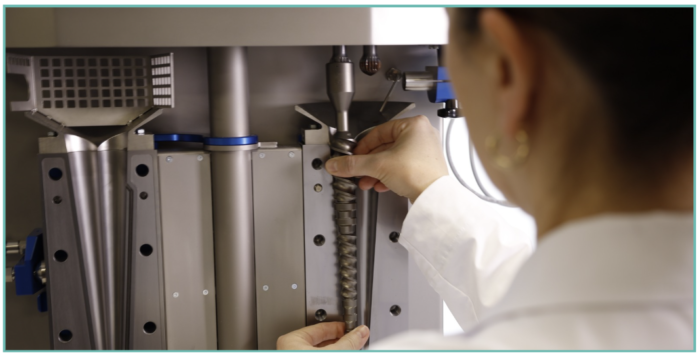
Figure 2. Xplore MC 40: The Micro-Compounder used to formulate PHA compounds
When combined with micro-shaping techniques such as micro-injection molding or micro-film extrusion, micro-compounding creates a rapid formulation–performance feedback loop. Mechanical behavior, crystallization characteristics, and processability can be evaluated immediately, accelerating optimization and reducing scale-up risks. For sensitive biopolymers such as PHAs, precision micro-processing is not merely a laboratory convenience, but a strategic enabler of sustainable, application-ready material development.
References
- Park H, He H, Yan X, Liu X, Scrutton NS, Chen G-Q. PHA is not just a bioplastic! Biotechnology Advances. 2024;71:108320. Link
- Getino L, et al. A review of polyhydroxyalkanoates: characterization, production, and applications. Microorganisms. 2024;12(10):2028. Link
- Chavan S, et al. A review on production of polyhydroxyalkanoate (PHA) biopolyesters in thermophilic conditions using waste feedstocks. Bioresource Technology. 2021;325:124685. Link