Advancing Rubber R&D: Faster, Cleaner, and More Efficient Compounding
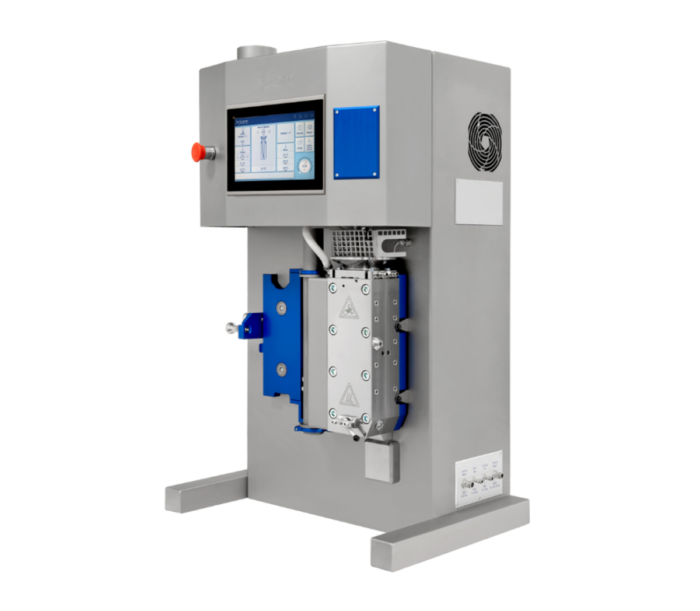
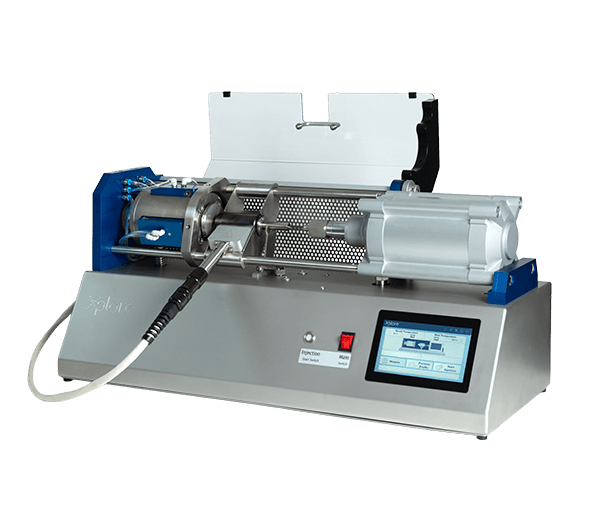
Rubbers and elastomers are essential across industries, requiring efficient formulation technologies for innovation and performance. Traditional Banbury-type internal mixers are labor-intensive, slow, difficult to clean, and require large material volumes (300–400 ml), making them costly and inefficient—especially for expensive additives. They also demand significant lab space due to carbon black (CB) dusting. Xplore’s MC 15 HT and MC 40 micro-compounders offer a faster, cleaner, and more efficient alternative. With 40 Nm of torque and fully intermeshing screws, they ensure uniform mixing, overcoming the inconsistencies of tangential screw designs. These micro-compounders process 15–40 ml of rubber in just 5 minutes, compared to the 30-minute traditional process, reducing material costs, chemical exposure, and turnaround time. Ideal for feasibility studies, formulation screening, and technical marketing, Xplore’s solutions streamline rubber R&D with precision and efficiency.

Support
Xplore provides exceptional support for the rubber and elastomer market, offering comprehensive resources like whitepapers, technical documents, FAQs, and expert guidance to optimize machine performance and streamline R&D processes.
Technical notes Specification sheets FAQ ContactBe inspired
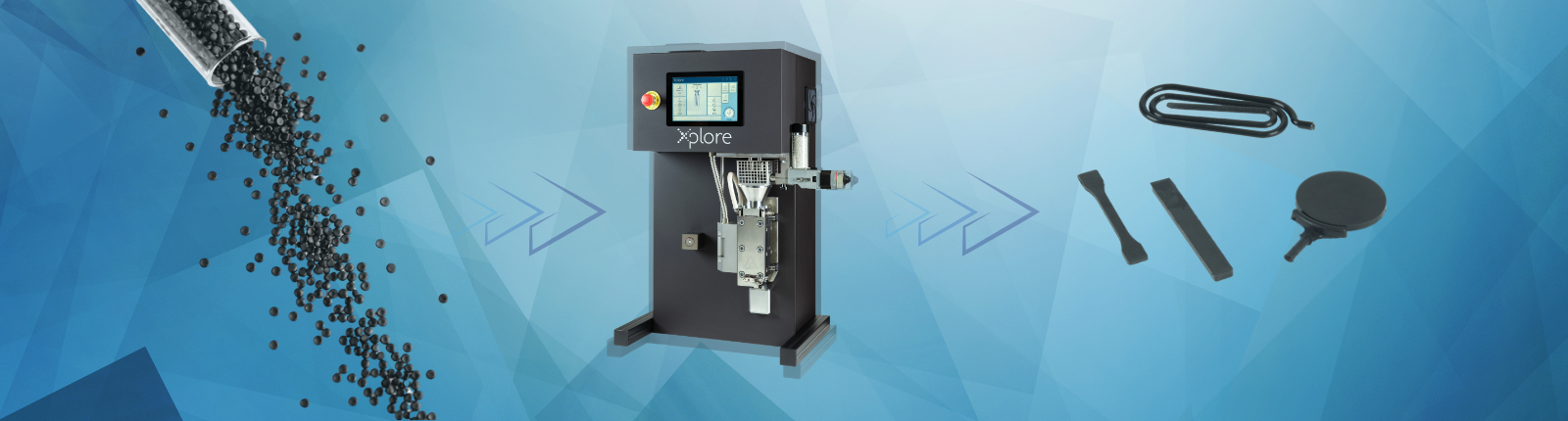
Building an Efficient Polymer Compound Development Workflow
Discover how an efficient polymer compound development workflow can help researchers move from formulation screening to sample production, testing, and scale-up while reducing material use and development time.
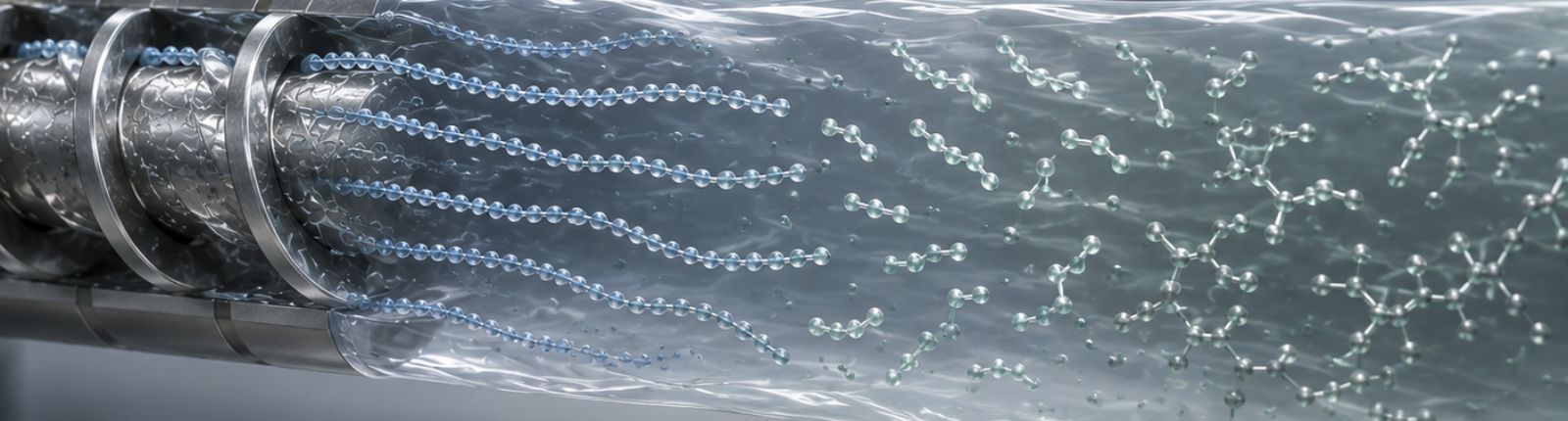
Degradation in polymer processing
Polymer degradation during processing can affect viscosity, molecular weight, colour, and performance. Explore its key mechanisms and how controlled micro-compounding helps study and minimise its effects.

What is Reactive Extrusion?
Reactive extrusion combines chemical reactions and melt processing to modify polymer properties, improve compatibility, and accelerate material development.