Degradation in polymer processing
Published: July 30, 2026 · Reading time: 4 minutes
Introduction
Polymer processing is rarely a purely physical operation. During extrusion, compounding, injection moulding, and other melt-processing techniques, polymers are continuously exposed to elevated temperatures, mechanical shear, oxygen, and moisture. These processing conditions can alter the molecular structure of the material, leading to degradation and, ultimately, changes in its performance.
Understanding how and why polymers degrade during processing is therefore essential for developing stable formulations, improving product quality, and optimizing industrial processing conditions.
Mechanisms of Polymer Degradation
The dominant degradation pathway depends on the polymer chemistry, processing conditions, and surrounding environment.
The most common degradation mechanisms include:
- Thermal degradation
- Thermo-oxidative degradation
- Hydrolytic degradation
- Mechanical (shear-induced) degradation
Although these mechanisms often occur simultaneously, one pathway usually dominates depending on the material being processed.
Thermo-Oxidative Degradation
Thermo-oxidative degradation occurs when polymers are processed in the presence of oxygen. Elevated temperatures promote the formation of free radicals, initiating oxidation reactions that propagate through the polymer chains.
These reactions may result in:
- Chain scission
- Molecular weight reduction
- Crosslinking
- Gel formation
- Colour changes
- Loss of mechanical performance
For many polyolefins, thermo-oxidative degradation represents the primary aging mechanism during melt processing (Fig.1).
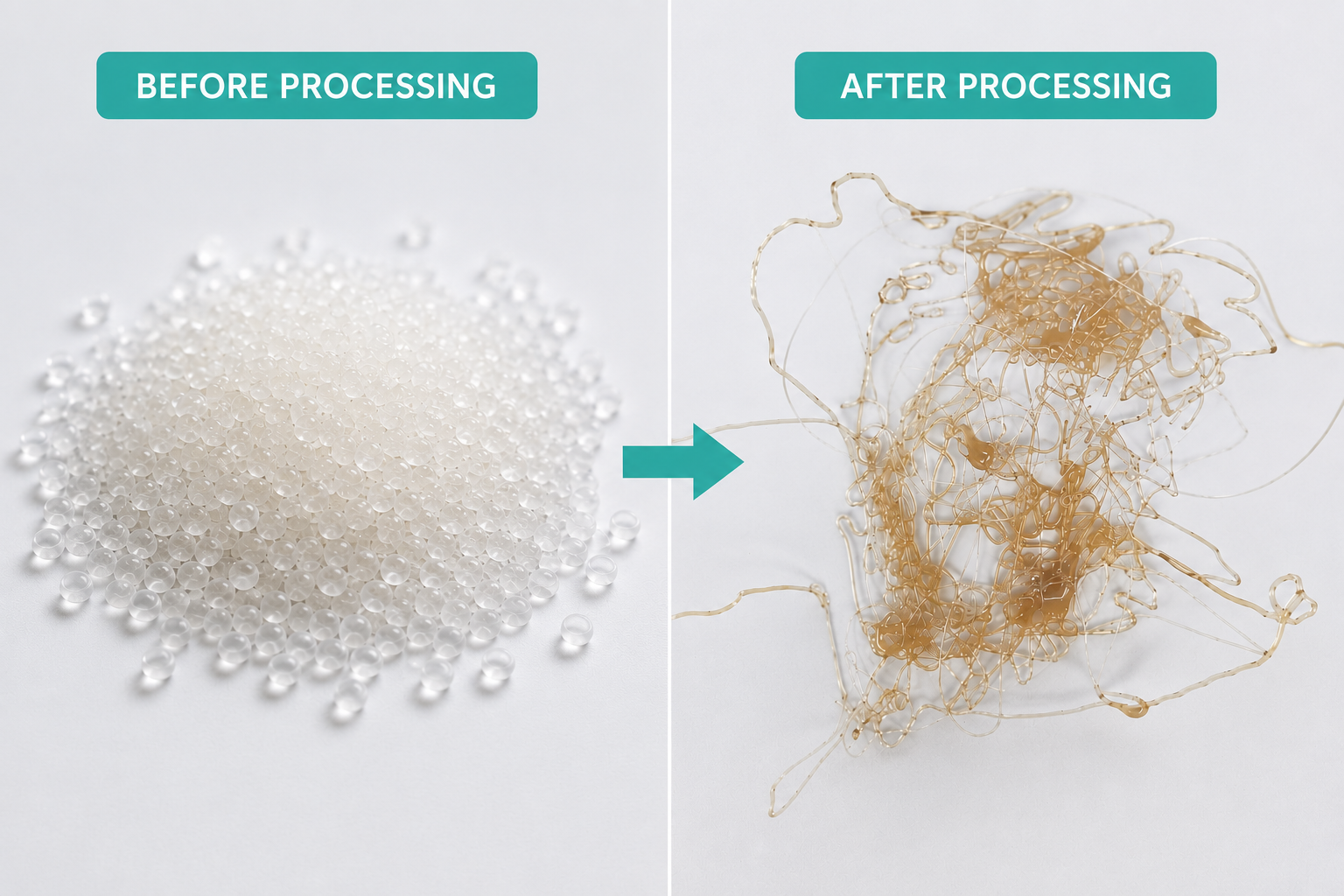
Figure 1. Before and After Polymer Processing
Hydrolytic Degradation
Moisture can significantly accelerate degradation in hydrolysis-sensitive polymers.
Water molecules react with susceptible chemical bonds, causing chain scission and reducing molecular weight. This mechanism is particularly important for condensation polymers such as:
- Polyesters: PET, PLA, PBT, etc.
- Polyamides: Nylon 6, Nylon 66, etc.
- Polycarbonates
Without adequate drying prior to processing, even small amounts of residual moisture can lead to substantial viscosity loss and deterioration of mechanical properties.
Shear and Thermal Degradation
High temperatures and excessive shear stresses can also damage polymer chains, particularly when long residence times are involved.
Processing parameters such as:
- barrel temperature,
- screw speed,
- residence time,
- and shear history,
all influence degradation kinetics.
The combined effects of heat and shear often lead to chain scission and crosslinking, directly affecting melt viscosity, molecular weight, and processability.
Why Monitoring Degradation Matters
Polymer degradation directly affects both processing behavior and the performance of the final product. It can lead to reduced molecular weight and viscosity, gel formation, discoloration, increased opacity, and deteriorated mechanical properties. Monitoring degradation is particularly important in polymer recycling, where materials are exposed to repeated thermal and shear stresses during multiple processing cycles [1]. Understanding these changes enables researchers to optimize processing conditions, preserve material quality, and develop effective stabilization strategies before scaling up to industrial production.
Preventing Polymer Degradation
Several strategies are commonly used to minimize degradation during processing.
These include:
- Antioxidants
- Thermal stabilizers
- Moisture scavengers
- Chain extenders
- Radical scavengers
- Bio-based stabilizers and other emerging sustainable additives [2, 3]
Each additive acts through a different stabilization mechanism, depending on the degradation pathway that needs to be suppressed.
However, many specialty additives are expensive, making laboratory-scale optimization both challenging and costly.
Studying Polymer Degradation with Micro-Compounders
Micro-compounders provide an efficient platform for investigating polymer degradation while minimizing material consumption.
Using only a few grams of material, researchers can systematically study the influence of:
- temperature,
- screw speed,
- residence time,
- atmosphere [4],
- additive concentration [5],
on degradation behavior.
The recirculation capability of Xplore micro-compounders enables precise control over thermal history, making it possible to reproduce degradation conditions in a highly controlled environment before transferring the optimized process to larger-scale extruders.
Furthermore, Xplore’s inline rheological software allows continuous monitoring of viscosity during processing, providing immediate insight into molecular weight changes associated with degradation.
When coupled with inline spectroscopy, researchers can simultaneously monitor changes in viscosity, color, opacity, and chemical structure in real time, creating a powerful platform for understanding degradation mechanisms and evaluating stabilization strategies.
Conclusion
Polymer degradation is an unavoidable aspect of melt processing, but its effects can be understood, monitored, and minimized through careful control of processing conditions and formulation design.
Micro-compounders offer an efficient and material-saving approach for studying degradation mechanisms, evaluating stabilizers, and optimizing processing parameters before industrial scale-up. Combined with inline rheological and spectroscopic analysis, they provide researchers with a comprehensive platform for developing more stable, reliable, and sustainable polymer formulations.
References
- Arjona, P., et al. “Simulated secondary mechanical recycling of PLA water bottles: insights into structural integrity, barrier performance, and biodegradability.” Resources, Conservation and Recycling 225 (2026): 108597. Link
- Markus, Katrin, et al. “Processing stability and radical scavenging efficiency of novel biobased stabilizers: Insights from long-term extrusion and DPPH assays.” Polymer degradation and stability 233 (2025): 111162. Link
- Castro, Jose Pablo Chacon, Jan Wagner, and Bernhard Schartel. “Towards sustainable flame retardancy of poly (limonene carbonate): Melem phytate with bio-based charring agents or aluminum trihydroxide.” Polymer Testing (2026): 109220. Link
- Filippone, Giovanni, et al. “Time-resolved rheology as a tool to monitor the progress of polymer degradation in the melt state–Part II: Thermal and thermo-oxidative degradation of polyamide 11/organo-clay nanocomposites.” Polymer 73 (2015): 102-110. Link
- Laachachi, A., et al. “Effect of ZnO and organo-modified montmorillonite on thermal degradation of poly (methyl methacrylate) nanocomposites.” Polymer Degradation and Stability 94.4 (2009): 670-678. Link