Advancing Micro-Compounding with Inline Spectroscopy
Published: April 16, 2026 · Reading time: 5 minutes
Introduction
Polymer processing is inherently dynamic, involving complex interactions between temperature, shear, composition, and time. These interactions govern the evolution of molecular structure, morphology, and ultimately material performance. Traditionally, understanding these changes has relied on offline characterization, which often fails to capture transient phenomena occurring during processing.
The emergence of inline process analytics, particularly spectroscopy and rheology, is transforming this paradigm. By enabling real-time, in-process monitoring, these tools allow direct observation of material transformations as they occur inside the melt [1,2].
In this context, micro-compounding provides a uniquely powerful platform, offering controlled processing with minimal material consumption, while increasingly serving as a data-rich experimental environment.
Inline Spectroscopy in Polymer Melt Processing
Inline spectroscopy, especially Near-Infrared (NIR), Raman, and UV–VIS techniques, has become an important tool for monitoring polymer processes.
What can be measured:
– Chemical composition and concentration
– Additive dispersion and distribution
– Polymer degradation or chain scission
– Reaction kinetics, for example reactive extrusion and polymerization
For example, NIR spectroscopy has been widely applied to monitor polymer blending and moisture content, while Raman spectroscopy provides sensitivity to molecular structure and crystallinity [3,4].
Unlike offline techniques, inline spectroscopy captures time-resolved transformations, enables non-destructive measurements, and supports closed-loop process control. However, spectroscopy alone does not directly measure flow or mechanical response, this is where rheology becomes critical.
Inline Rheology: Capturing Flow and Molecular Evolution
Inline rheological measurements provide insight into the viscoelastic behavior of polymer melts under processing conditions.
Key parameters:
– Viscosity
– Shear thinning behavior
– Elastic response
Changes in rheology are directly linked to molecular weight evolution, branching or crosslinking, filler–polymer interactions, and thermal degradation. Inline rheology has been successfully used in extrusion to monitor process stability and detect material inconsistencies in real time [5].
The Power of Combining Spectroscopy and Rheology
While spectroscopy provides chemical and structural information, rheology reflects the mechanical response of the evolving system. Their combination enables a direct link between structure, process, and properties.
This integrated approach allows correlating chemical changes with viscosity evolution, tracking reaction-induced rheological transitions, understanding how dispersion affects flow behavior, and identifying optimal processing windows in real time. For example, during reactive extrusion, spectroscopy detects conversion or functional group changes, while rheology captures network formation or degradation. Together, they provide a holistic understanding of material evolution [6,7].
Why Micro-compounding is the Ideal Platform
Micro-compounding introduces unique advantages for implementing inline analytics:
– Low material consumption
– Fast screening of formulations
– Highly controlled residence time and shear history
– Recirculation capability, extended observation window
These features make micro-compounders ideal for R&D of biopolymers, nanocomposites, and functional systems. When equipped with inline spectroscopy probes and real-time rheological monitoring, micro-compounders evolve into miniaturized process analytical laboratories, enabling rapid generation of structure, process, and property datasets (Fig.1).
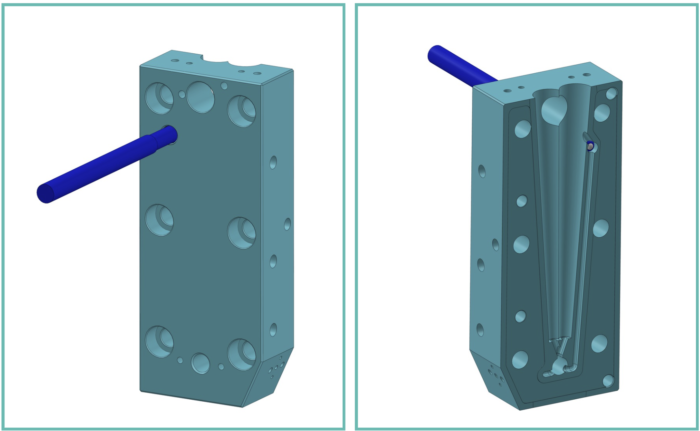
Figure 1. Inline Spectroscopy Sensor Integrated on Micro-Compounder Barrel
This work is supported by a collaboration with ColVisTec, specialists in inline spectroscopic solutions. Their technology enables real-time insight into material transformations during processing, complementing the capabilities of micro-compounding.
Application Areas
Polymer blends: monitoring miscibility and phase evolution, correlating dispersion with viscosity changes.
Biopolymers: tracking thermal degradation and optimizing stabilization strategies.
Reactive extrusion: following conversion kinetics and detecting crosslinking or chain extension.
Nanocomposites: assessing dispersion quality and linking filler networks to rheological response.
Conclusion
The integration of inline spectroscopy and rheology supports data-driven material development. This enables reduced trial and error experimentation, faster formulation optimization, improved reproducibility, and enhanced scalability to industrial processes.
Inline spectroscopy and rheology, when combined, provide a powerful framework for understanding polymer processing in real time. Within micro-compounding, this combination transforms small-scale experiments into high-information, predictive workflows. This convergence of processing and analytics marks a key step toward the future of polymer R&D.
References
- Coates, J. Interpretation of Infrared Spectra, A Practical Approach, Encyclopedia of Analytical Chemistry, 2000. Link
- Ciurczak, E.W., Inge, B.; Workman Jr., Burns, D.A., Handbook of Near-Infrared Analysis, CRC Press, 2021. Link
- Roggo, Y. et al. A Review of Near Infrared Spectroscopy and Chemometrics in Pharmaceutical Technologies, Journal of Pharmaceutical and Biomedical Analysis, 2007. Link
- Everall, N. Confocal Raman Microscopy; Common Errors and Artefacts, Analyst, 2010. Link
- Osswald, T.A.; Hernández-Ortiz, J.P.; Polymer Processing; Modeling and Simulation, Hanser, 2006. Link
- Saerens L., Vervaet C., Remon J.P., De Beer T., Process monitoring and visualization solutions for hot-melt extrusion: a review, Journal of Pharmacy and Pharmacology, Volume 66, Issue 2, February 2014, Pages 180–203. Link
- Bousmina, M. Rheology of Polymer Blends: Linear Model for Viscoelastic Emulsions, Rheologica Acta, Volume 38, pages 73–83, 1999. Link